Editorial note: This article describes a situation that changed several times in 2026. Check the current status with SENAE (Ecuador) and DIAN or MinCIT (Colombia) on the publication date, and update any information that may have changed.
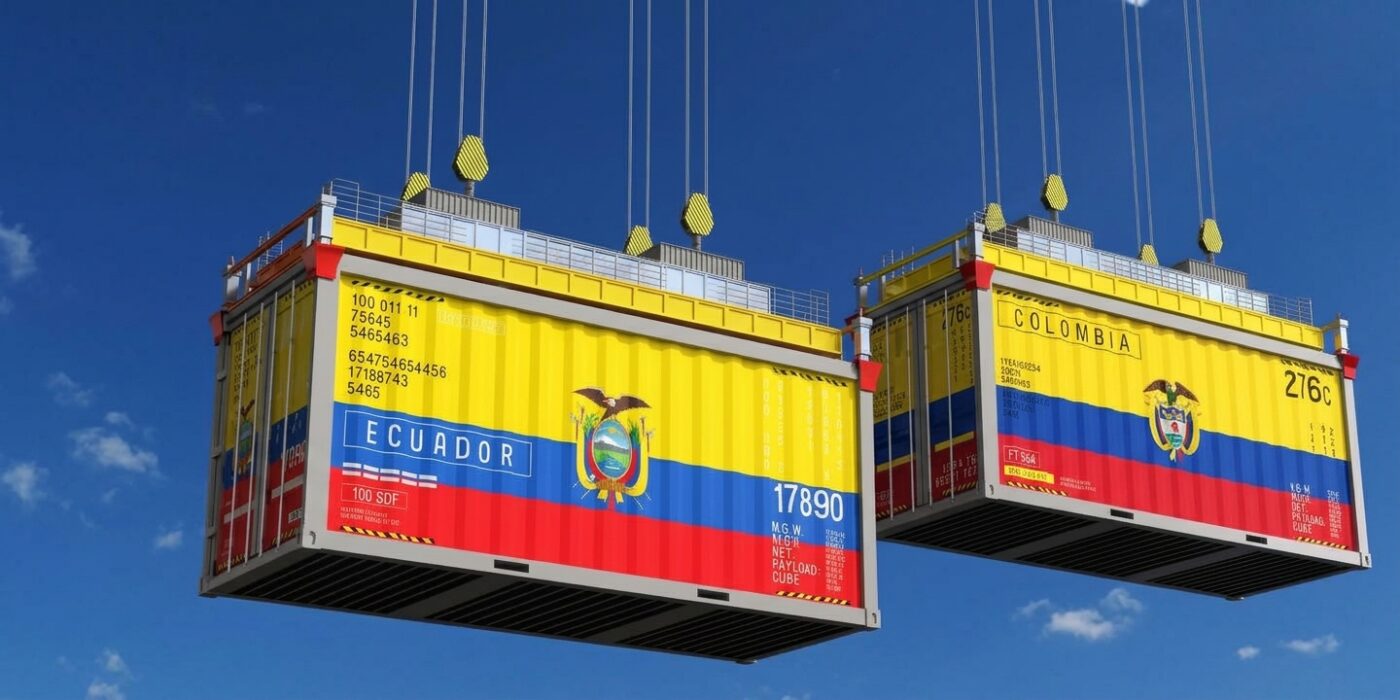
Ecuador and Colombia are members of the Andean Community (CAN), where goods generally move between member countries duty-free. In 2026, this arrangement was disrupted: both governments imposed reciprocal tariffs that eventually reached 100%, only to withdraw them in mid-year following an order from the CAN. If you import or export between these two countries, it is important to understand what happened and which measures remain in effect.
What the General Rule Says: Zero Tariffs Within the CAN
The Andean Community operates as a free trade area. Products originating in a member country, such as Colombia or Ecuador, can enter the other country duty-free, provided they meet the rules of origin and are accompanied by the corresponding certificate of origin. This is the starting point and the situation the CAN ordered both countries to restore.
What Happened in 2026
The dispute began over border security. Ecuador accused Colombia of failing to take sufficiently strong action against organized crime along their approximately 600 km shared border. The events unfolded as follows:
- January 22: Colombia suspended electricity sales to Ecuador and announced 30% tariffs on Ecuadorian products.
- Early February: Ecuador introduced a 30% "security surcharge" on imports from Colombia. Colombia formalized its reciprocal 30% tariffs through Decree 170, dated February 20.
- Spring: Ecuador increased its surcharge to 50% and, effective May 1, raised it to 100%.
- May 7: The CAN issued resolutions ordering both countries to eliminate these measures.
- June 1: SENAE repealed the security surcharge on imports from Colombia.
- June 5: Colombia issued Decree 583, repealing Decree 170 and removing its tariffs on Ecuadorian products.
What Restrictions Remained Afterward
The end of the tariffs did not resolve every issue. When the measures were lifted, the following matters remained unresolved:
- Ecuadorian rice: Colombia temporarily maintained the tariff, with a 45-day deadline to eliminate it, citing smuggling along the southern border.
- National security: Decree 583 allows Colombia to restrict the entry of Ecuadorian goods on national security grounds.
- Electricity: Colombia's electricity sales to Ecuador remained suspended following the January 22 decision.
- Crude oil transportation through the SOTE pipeline: As of January 23, the transportation fee for Colombian crude oil increased from approximately USD 3 to USD 30 per barrel.
- Pending proceedings before the CAN: Both governments had filed legal appeals that were still under review. The CAN does not have the authority to order refunds of amounts already collected.
What This Means for Your Logistics Operations
The uncertainty experienced during these months left valuable lessons for any company buying or selling goods across the region:
- Check the tariff classification and country of origin. Zero tariffs depend on the Andean certificate of origin and whether the product qualifies as originating in a member country.
- Ask about specific duties and restrictions. Even when the general tariff is zero, sensitive products such as rice may be subject to separate rules.
- Build flexibility into your quotes. A sudden change in tariffs can significantly affect the landed cost of your goods. Always request written quotations with a clearly stated validity date.
- Don't put your supply chain on hold because of a headline. Confirm the actual situation with your freight forwarder before shipping cargo or canceling an order.
How Cargo Moves Between the Two Countries
Most trade between Colombia and Ecuador moves by road, crossing through the Rumichaca International Bridge and the San Miguel border crossing, as well as by sea freight between ports. Border closures and inspections can affect transit times and costs, which is why having an alternative route ready is always a good idea.
Sources: Primicias, timeline of the trade disputehttps://www.primicias.ec/economia/guerra-comercial-ecuador-colombia-importaciones-daniel-noboa-gustavo-petro-120086/) . Expreso, restrictions remaining after the security surcharge was lifted (https://www.expreso.ec/economia-y-negocios/restricciones-mantienen-ecuador-colombia-tasa-seguridad-284130.htmlEl Diario, Colombia removes 30% reciprocal tariffshttps://www.eldiario.ec/ecuador/colombia-elimina-aranceles-reciprocos-del-30-a-productos-importados-desde-ecuador-09062026/El Diario, what comes next after the tariffs were lifted, according to the CANhttps://www.eldiario.ec/ecuador/lo-que-viene-tras-el-fin-de-los-aranceles-entre-ecuador-y-colombia-segun-la-can-09062026/CNN en Español, January 22https://cnnespanol.cnn.com/2026/01/22/colombia/colombia-ecuador-petro-noboa-aranceles-orix)

 English
 Spanish