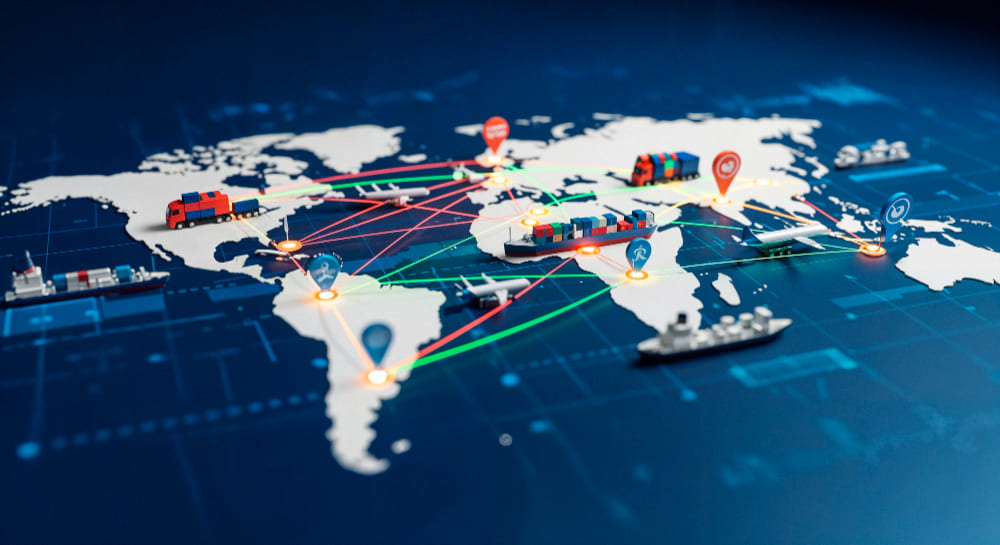
No country produces everything it needs or consumes everything it produces. Foreign trade the exchange of goods and services between countries bridges that gap and has become one of the most important drivers of economic development.
Creates jobs and drives growth
Every export leaving a country represents work in the fields, manufacturing plants, ports, transportation, and financial and logistics services. When a sector succeeds in selling to international markets, its production grows, it hires more people, and it drives growth throughout its entire supply chain.
Brings in foreign currency and supports economic stability
Exports bring foreign currency into a country. These foreign currency earnings are used to pay for imports, invest, and support economic stability. In dollarized economies, a healthy flow of exports is especially important for maintaining liquidity.
Provides access to technology and inputs
Many industries depend on raw materials, spare parts, or machinery that are not produced locally. Importing them at a competitive cost allows businesses to produce more, improve quality, and meet international standards.
Boosts competitiveness
Competing in global markets forces companies to improve their quality, costs, and delivery times. This pressure raises the overall level of the economy and also benefits the domestic market.
Diversifies markets and reduces risks
A country or company that sells to a single customer is highly dependent on that customer. Expanding into different markets distributes risk and provides greater protection against local crises.
Benefits consumers
Imports expand the range of products available, improve quality, and put downward pressure on prices. From smartphones to medicines, a large part of what we use today has crossed an international border.
The link that makes it all possible: logistics
For an export to reach its destination, or an import to arrive on time, more than a good product is needed. It requires choosing the right mode of transportation (ocean freight, air freight or ground), preparing the necessary documentation, complying with customs regulations, securing the cargo, and coordinating every step of the journey. This is where a freight forwarder makes a difference: by reducing errors, saving time, and turning a complex process into a predictable one.

 English
  Spanish