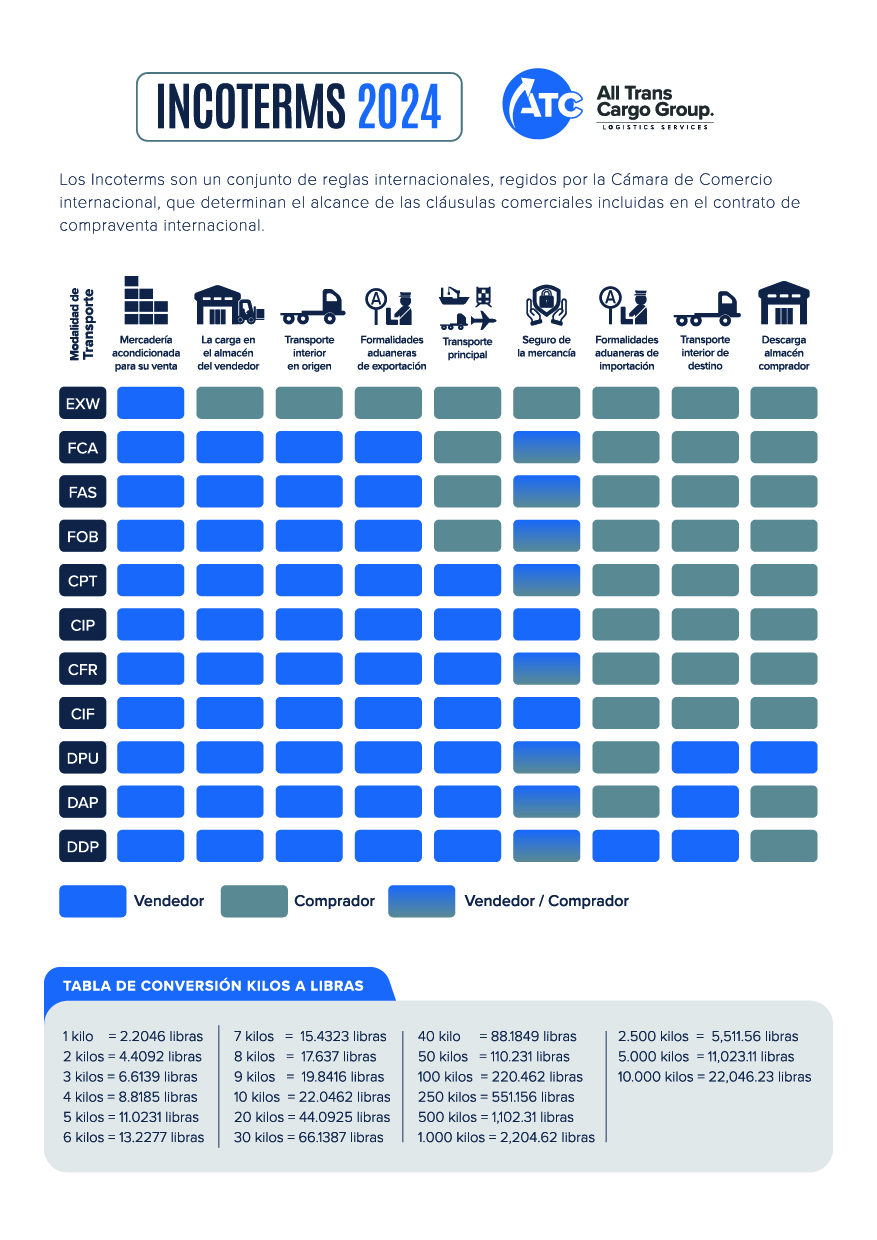

In any international trade transaction, there are key questions: Who pays for the freight? Who assumes the risk if the goods are damaged? Where does each party’s responsibility begin and end? Incoterms answer all of these questions. In this guide, we explain what Incoterms 2020 are, what they are used for, and how to choose the right one.
What Are Incoterms?
Incoterms (International Commercial Terms) are a set of rules published by the International Chamber of Commerce (ICC) that define the obligations, costs, and risks between the buyer and seller in an international sale of goods. They are updated periodically; the current version is Incoterms 2020.
What Are They Used For?
They help both parties clearly understand where their responsibilities begin and end: who arranges and pays for transportation, who is responsible for insurance, at what point the risk transfers from the seller to the buyer, and who handles customs procedures. Choosing the right Incoterm helps prevent misunderstandings, unexpected costs, and disputes.
They are divided into two groups according to the mode of transport:
For Any Mode of Transport
- EXW – Ex Works
- FCA – Free Carrier
- CPT – Carriage Paid To
- CIP – Carriage and Insurance Paid To
- DAP – Delivered at Place
- DPU – Delivered at Place Unloaded
- DDP – Delivered Duty Paid
Only for Sea and Inland Waterway Transport
- FAS – Free Alongside Ship
- FOB – Free On Board
- CFR – Cost and Freight
- CIF – Cost, Insurance and Freight
The Most Commonly Used and How to Choose
In practice, some of the most frequently used Incoterms are FOB and CIF for sea freight, and EXW and DDP for any mode of transport. The right choice depends on how much control and responsibility you want to assume. With EXW, the buyer takes on most responsibilities from the seller’s factory. With DDP, the seller handles the shipment and delivers the goods to the buyer’s door with duties paid. FOB and CIF divide responsibilities at different stages of the shipment, particularly around the port of origin and the main sea transport. The key is to choose the Incoterm based on your experience, your level of control over the transportation process, and your risk tolerance.

 English
  Spanish