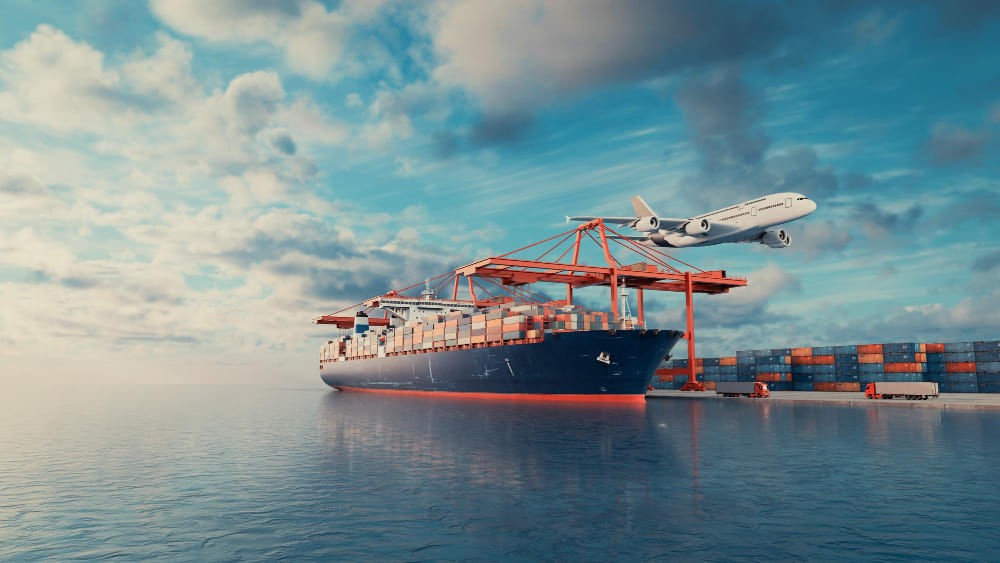
One of the most important decisions when moving international cargo is choosing between ocean and air freight. Both have their advantages, and making the right choice can save you money or valuable time. Here, we compare both options so you can determine which one is best for your cargo.
Ocean Freight: Cost-Effective and High Capacity
Ocean freight is the most cost-effective option for moving large volumes of cargo. It is ideal for bulky, heavy, or non-urgent shipments. Its main disadvantage is transit time: ocean shipments generally take longer than air freight. However, it remains the backbone of international trade due to its low cost per unit.
Air Freight: Fast and Reliable
Air freight is unmatched when it comes to speed. It is the best option for urgent, perishable, or high-value cargo. In return, it comes at a higher cost and has stricter weight and dimensional limitations. When time is critical, air freight can justify the additional cost.
Comparison Table
|
Criteria |
||
|
Cost |
Lower |
Higher |
|
Transit Time |
Longer |
Very fast |
|
Volume / Weight |
Large volumes |
Smaller shipments |
|
Ideal for |
Bulky, non-urgent cargo |
Urgent, perishable, or high-value cargo |
|
Charged by |
Container or m³ (LCL) |
Chargeable weight (actual or volumetric) |
Which One Should You Choose? The Practical Rule
- Choose ocean freight if your cargo is bulky or heavy, is not urgent, and you want the lowest possible cost.
- Choose air freight if your cargo is urgent, perishable, or high-value, or if the shipment is relatively small in volume.
A key factor in air freight is volumetric weight: if your cargo takes up a lot of space but weighs relatively little, you may be charged based on its volume rather than its actual weight.

 English
  Spanish